
What’s white gold made of? Metals, karats, and worth

Find out your jewelry's worth in 60 seconds.
Instant ValuationWhite gold’s color means it’s harder to identify at a glance than yellow or rose gold. But white gold is still gold. What changes is the amount of pure gold in the alloy, the metals mixed with it, and the tinted finish you see on the surface.
Once you know how those components add up, you can make a better estimate of what your white gold is made of and what your jewelry may be worth. This guide walks through all the variables that go into white gold and how to identify the factors that change your piece’s value.
What’s white gold made of?
White gold is an alloy, or pure gold mixed with lighter-colored metals to change its color and make it practical for jewelry. Pure 24K gold is naturally yellow and soft, so jewelers combine it with other metals for most everyday pieces.
To make white gold, jewelers melt the gold and measured alloying metals together. The alloyed metals mixed into the recipe may include:
- Nickel, which can make the alloy harder and lighter in color. It’s a less expensive alloy, but can irritate your skin if you have a nickel sensitivity.
- Palladium, which is an expensive, precious white metal that can be used to replace nickel.
- Silver and zinc, which can be used to adjust the color and working properties of the alloy.
The karat, like 14K or 18K, tells you how much of that alloy is pure gold. The rest is made of other metals, and the exact recipe can vary by manufacturer.
The higher the karat, the more gold is in the alloy. At the same weight, 18K white gold contains more pure gold than 14K, and 14K contains more than 10K.
14K is still roughly 58.3% gold whether the finished piece is white, yellow, or rose gold. There’s no single recipe that every jeweler follows, though. Two 14K white gold rings can contain the same proportion of gold while using different metals for the remaining 41.7%.
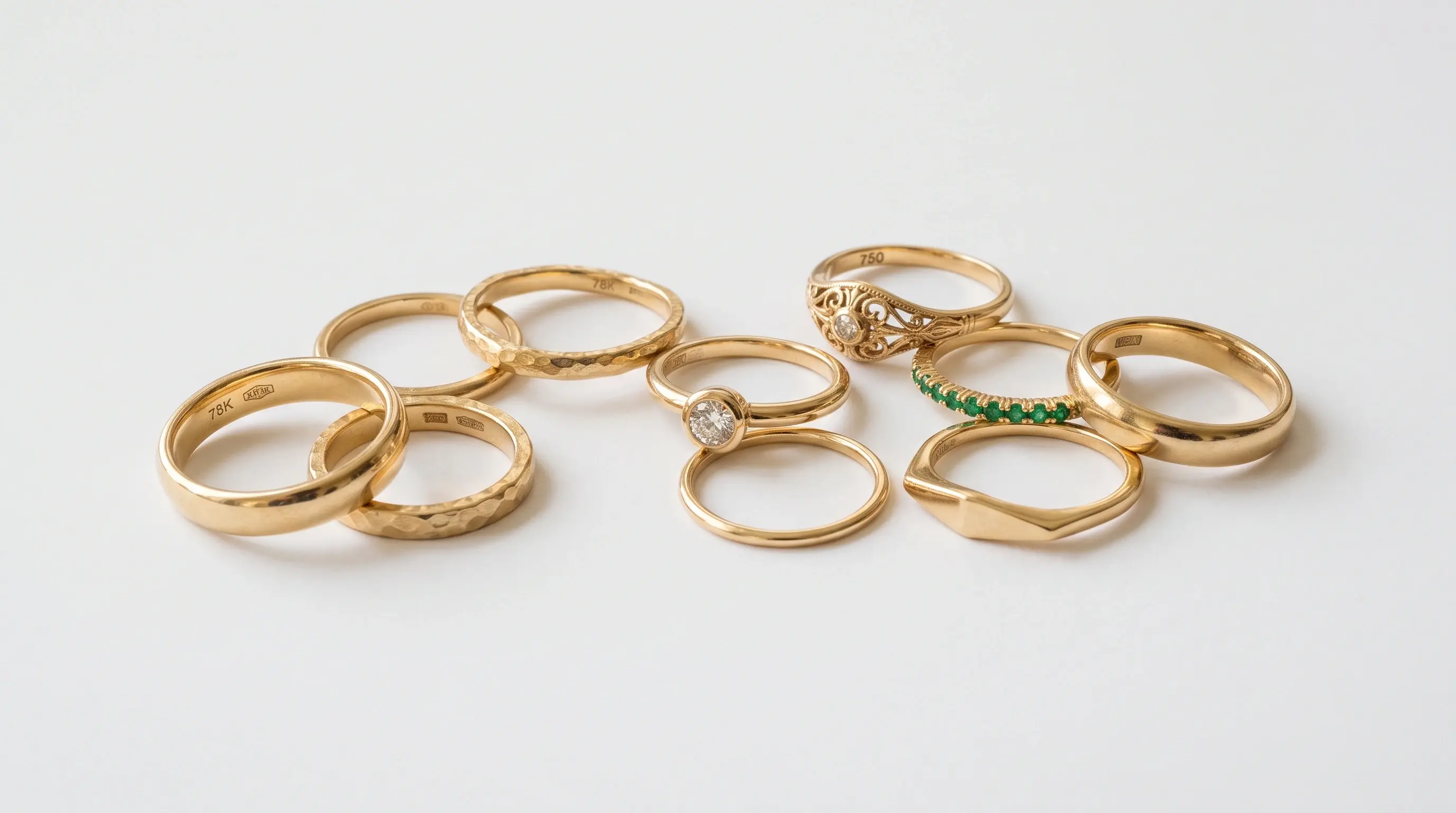
Some gold jewelry also includes three-digit marks, also called fineness marks, alongside the karat stamp. Those marks are another way of expressing gold purity on a 1,000-part scale. So, a 750 stamp means the alloy is 75% gold (or 18K), while a 585 stamp is the standard fineness mark for 14K gold. Those tiny numbers inside your ring are the quickest clue to discovering what you actually own.
Here’s a breakdown on the most common gold ratios you’ll find in jewelry.
If you don’t know what white gold looks like and are trying to determine if your silver-colored piece is white gold, silver, or something else, look for a fineness mark. A 925 stamp means it’s sterling silver, and platinum ranges from 850 to 999 (with a standard of 950).
These hallmarks give you a place to start determining what your white gold piece is worth, but it’s not a whole valuation. It tells you the stated purity, but not the piece’s weight, current gold price (or spot price), and exact alloy recipe. That’s why two white gold pieces carrying the same stamp can still be worth very different amounts. A credible jewelry appraiser, like Unvault, can give you more information about your white gold’s worth.
White gold isn’t truly white: Rhodium plating
The white gold underneath the finish usually isn’t the bright, silvery white shine you see in a jewelry case. Because pure gold is yellow, the finished alloy can keep a soft cream or slightly warm cast depending on which metals were mixed into it.
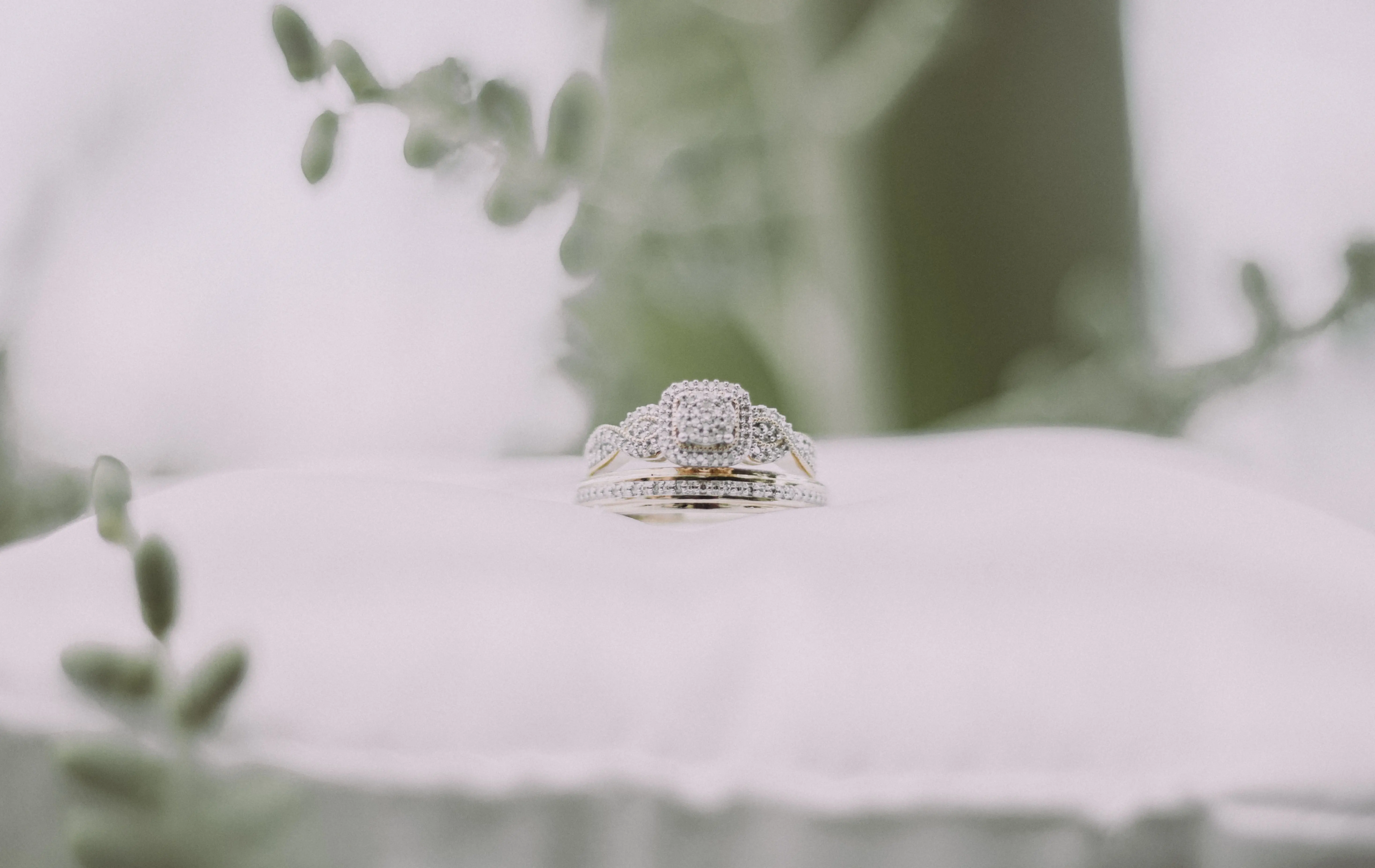
Bright white gold pieces tend to get their look from rhodium plating. Jewelers apply rhodium, a white precious metal, as a thin layer to the piece’s surface. That layer creates the crisp white sheen commonly associated with white gold.
However, that bright finish doesn’t last forever. Friction and everyday wear gradually wear away the plating, revealing the warmer alloy underneath. If an older white gold ring starts looking slightly yellow around high-contact areas, a jeweler can restore the finish by cleaning and polishing the piece before applying a new layer of rhodium.
The plating wearing away doesn’t change the amount of gold underneath, and neither does reapplying the rhodium.
Is white gold real gold?
White gold is real gold, even though it doesn’t have gold’s natural yellow color. But “real gold” and “pure gold” aren’t the same thing. Most jewelry sold as 10K, 14K, or 18K gold contains other metals regardless of whether the finished piece is white, yellow, or rose. It’s the karat that tells you how much gold is actually there.
At the same weight and karat, white gold and yellow gold contain the same amount of pure gold. The color doesn’t make one inherently more valuable.
A simple melt value calculation starts with the piece’s weight, purity, and the current gold spot price. For example, knowing that a ring is 14K gets you part of the way there, but you’ll still need to know its weight and alloy composition to determine your gold ring’s value.
The other metals in the alloy change what the piece is worth, depending on where you want to sell it. Expensive alloys like palladium can increase the jewelry’s resale value, while less expensive ones like nickel lower the overall cost of materials. Buyers who are going to melt the jewelry down and reuse the gold are less likely to care about the other metals, reflected in their valuation.
The rhodium finish doesn’t meaningfully change the value calculation. A shiny, freshly plated engagement ring and one with years of visible wear can still contain the same amount of gold underneath.
A finished piece may also have value tied to its gemstones, design, or demand on the secondhand market. The gold may account for most of the value in an old chain or simple wedding band. A signed designer piece or diamond ring can be a different story, because a buyer may be looking at the jewelry as a complete item rather than only as refineable gold.
A thorough gold appraisal through a platform like Unvault can tell you more about its value before you sell yourself short.
Unvault can help you learn your white gold’s worth
No matter what your white gold jewelry looks like, Unvault’s gold calculator can give you a starting point to understand its value. Enter the piece’s weight and karat purity to calculate its melt value using the current gold spot price. Then, think of that number as a baseline for the gold content rather than an automatic selling price — there’s a lot more at play.
To get more detailed insights, you can use our free valuation for an estimate based on the piece as a whole. This is especially useful for gold jewelry with other features that can impact its value, like a recognizable design or gemstone. Upload pictures of your piece, and we’ll take a look and quickly get you an answer.
You can also send in the piece to get a physical inspection and account for things like other metals in the alloy. This in-depth valuation comes from Unvault’s experts, and we’ll record the appraisal on video. You’ll see exactly what was examined and how we reached the value before you make a decision, with no commitments to sell your piece with us.
Get to know your white gold jewelry’s worth with Unvault.
Frequently Asked Questions
<script type="application/ld+json">
{
"@context": "https://schema.org",
"@type": "FAQPage",
"mainEntity": [
{
"@type": "Question",
"name": "Where does white gold come from?",
"acceptedAnswer": {
"@type": "Answer",
"text": "White gold starts as the same naturally yellow gold used in other gold jewelry. After the gold is mined and refined, manufacturers combine it with other metals like nickel and zinc to create the light-colored alloy. There’s no such thing as a naturally occurring “white” gold."
}
},
{
"@type": "Question",
"name": "Does white gold contain nickel?",
"acceptedAnswer": {
"@type": "Answer",
"text": "Some white gold does, but nickel isn’t part of every formula. Manufacturers can use different alloy recipes to create white gold, including ones that rely on palladium or other metals instead."
}
},
{
"@type": "Question",
"name": "Does a scratched or worn white gold piece still have value?",
"acceptedAnswer": {
"@type": "Answer",
"text": "Yes. Everyday wear can affect the condition and resale value of a finished piece, but surface-level scratches and tarnished spots don’t remove the gold already contained in it or the melt value of that gold. That distinction matters with older jewelry — a white gold piece that looks worn on the surface likely still has substantial material value based on its karat purity and weight."
}
}
]
}
</script>
-converted-from-png.webp)